Framing the Universe.
A Proposal.

How can we model systems not only as they operate, but as they are becoming, and even as they begin?

Challenging conventional boundaries between disciplines, Framing the Universe. A proposal offers a new language for understanding how systems grow, transform, and connect. It is an invitation to rethink the dynamics of change and explore the deeper patterns that unite the natural and human worlds.
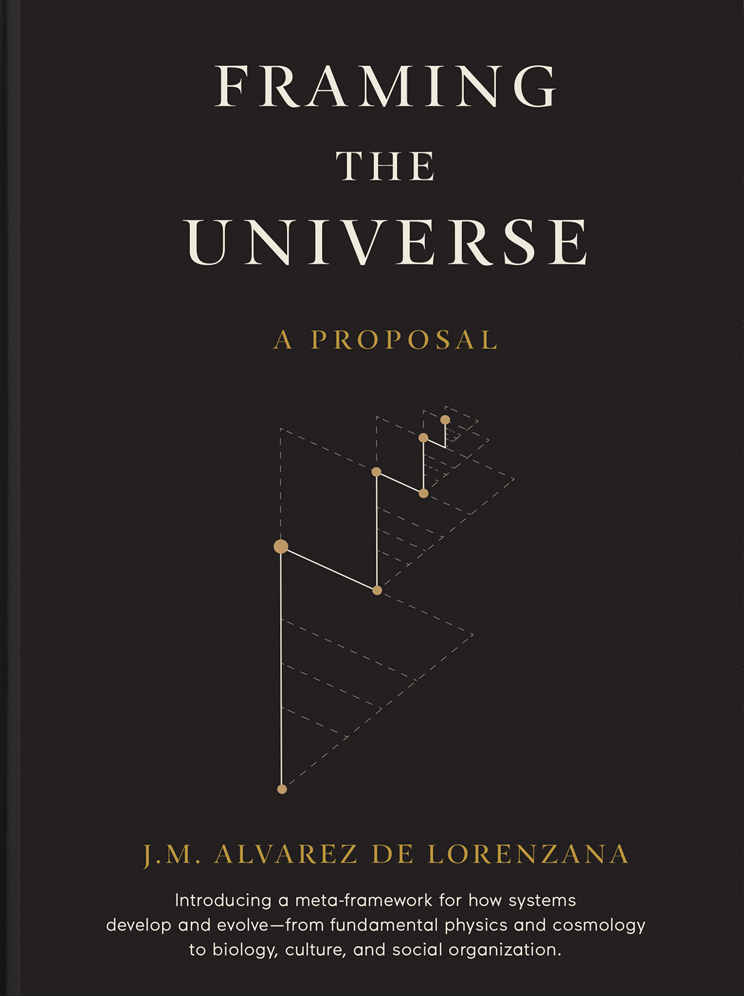
Book cover of Framing the Universe, by Juan Manuel Alvarez de Lorenzana, PhD

About the author

Juan Manuel Alvarez de Lorenzana (Madrid, 1942) has a licentiate degree in History from the University of Havana, with a thesis on the history of the railroads in Cuba in the XIX century. He has a PhD in contemporary history and international relations from the University Complutense of Madrid concerning technological transfer between developed and less developed countries. He was a Research Associate at the Institute of International Relations, University of British Columbia, from 1992-2005. He is an independent researcher on issues related to development and evolution across fields.

Photo of Juan Manuel Alvarez de Lorenzana, PhD, author of "Framing the Universe. A Proposal"

Acclaim for Framing the Universe

“At the heart of the book is a compelling synthesis built around two core processes—expansion and contraction—through which structure and complexity emerge. This dual-process model provides a clear and accessible way to think about the development of systems across scales, from the formation of galaxies to the rise of life and human societies.”

“The book will be of particular interest to those seeking conceptual tools to connect cosmology, life, and human history within a single explanatory structure. In summary, Framing the Universe advances Big History’s core project: to situate humanity within the deep-time dynamics of an evolving Universe. It offers both a synthesis of existing ideas and a framework that invites further development, discussion, and application across disciplines.”

David LePoire, PhD
President of the International Big History Association